
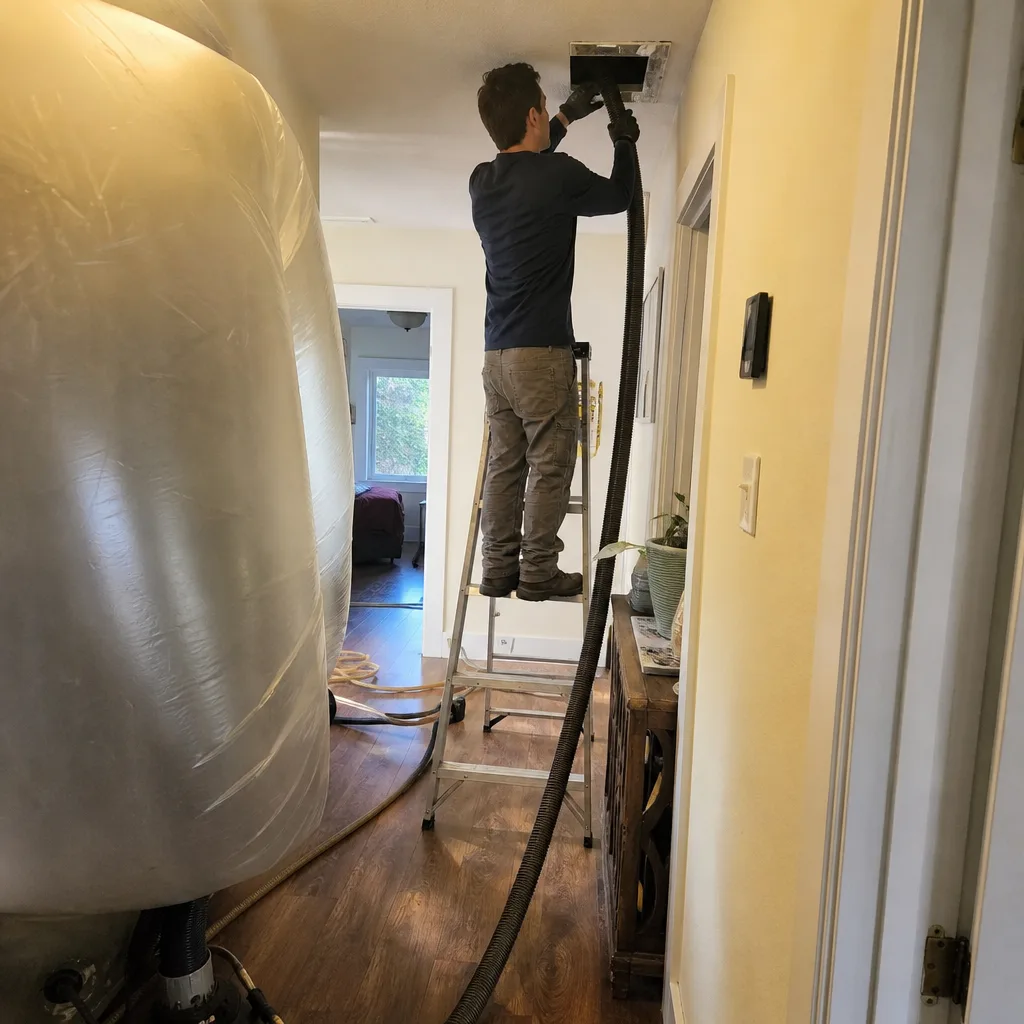
Last updated November 22, 2026
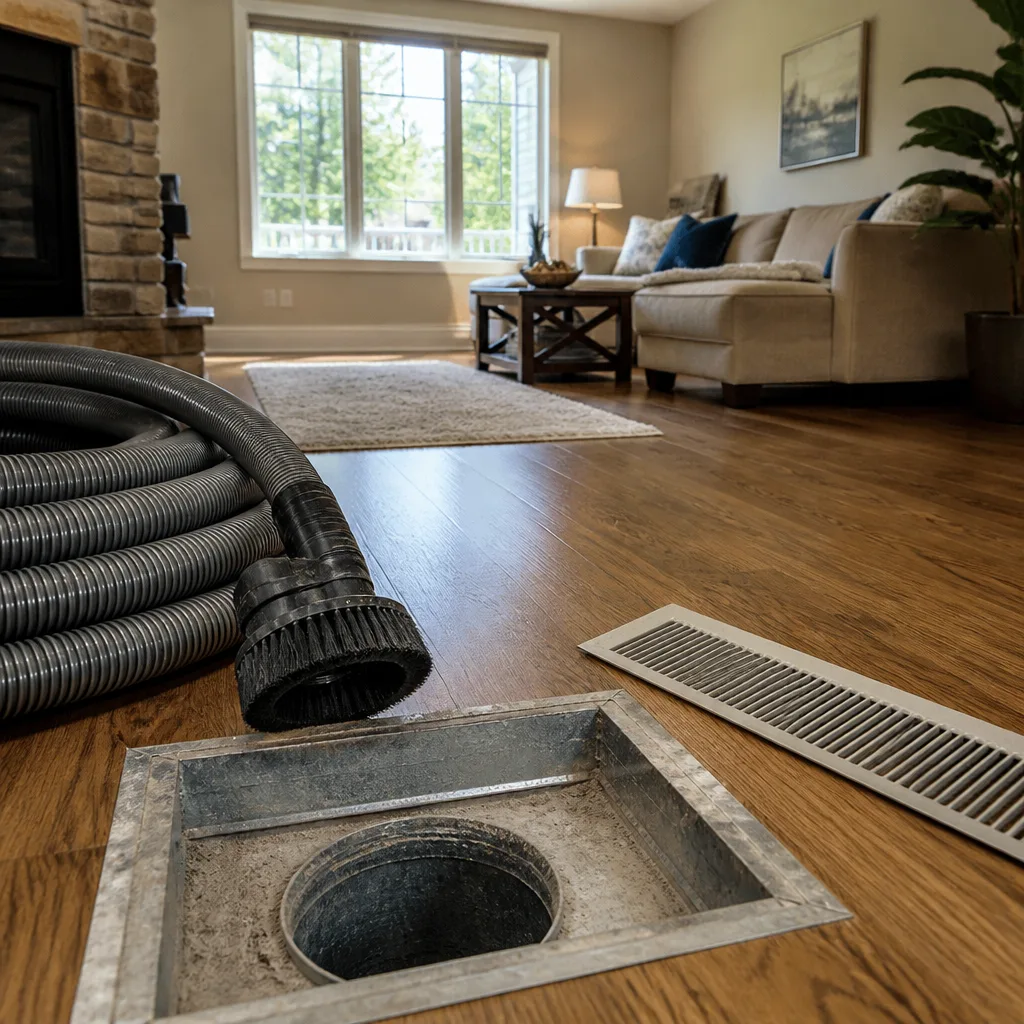 Whole-home duct cleaning
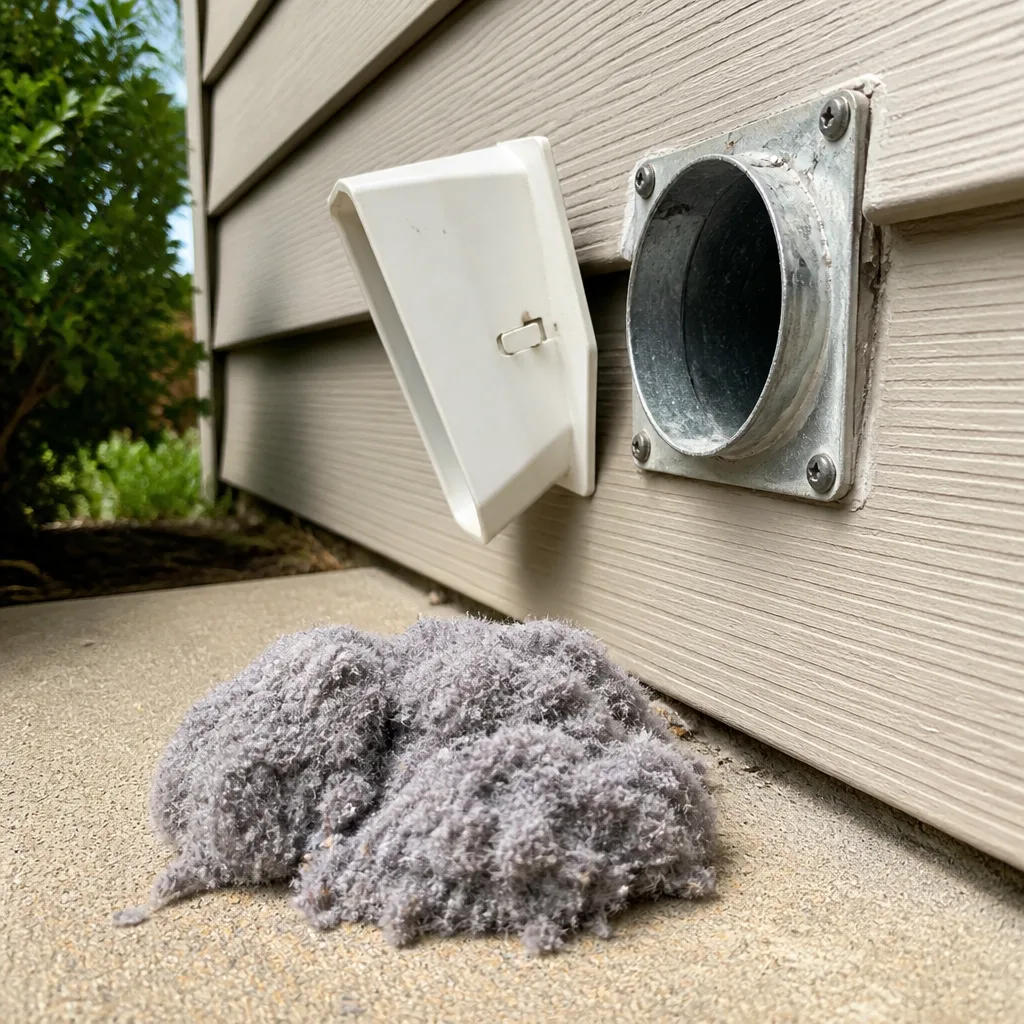 Dryer vent cleaning
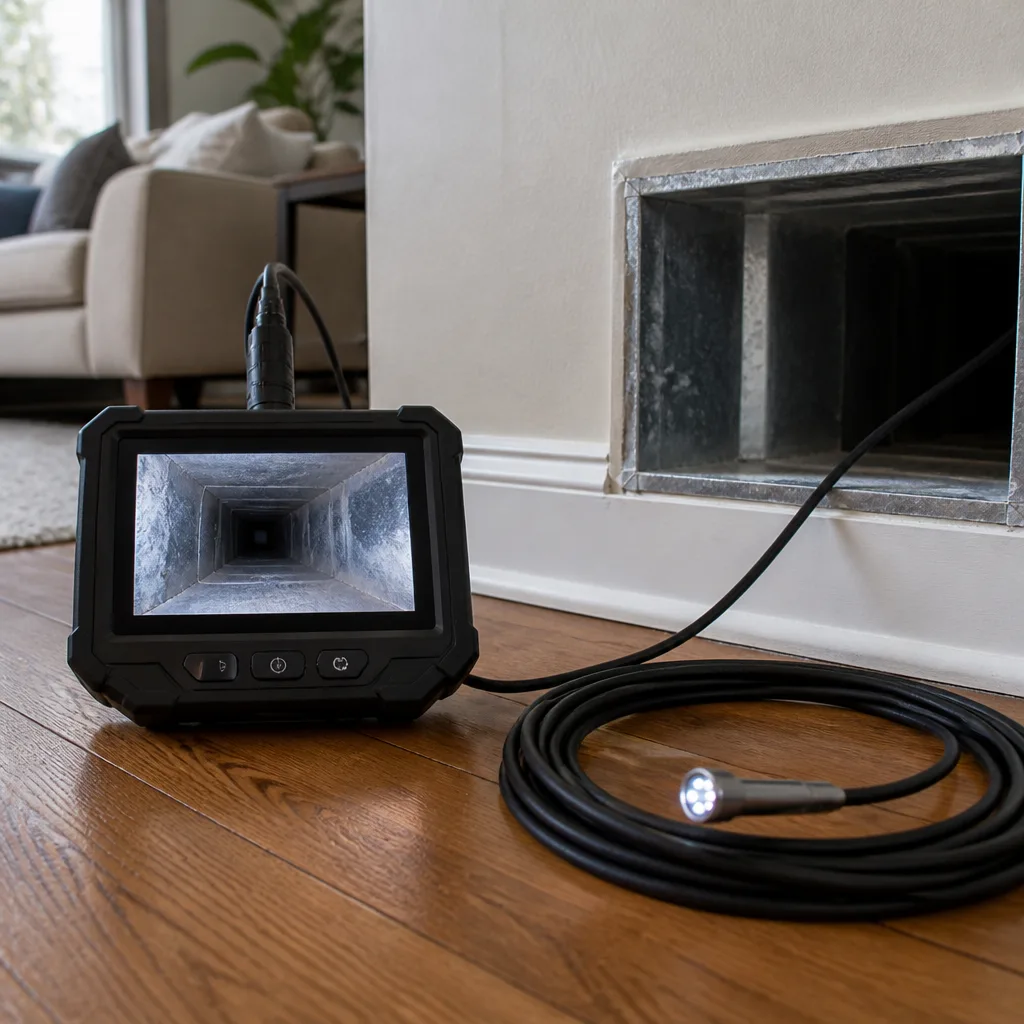 Camera inspection
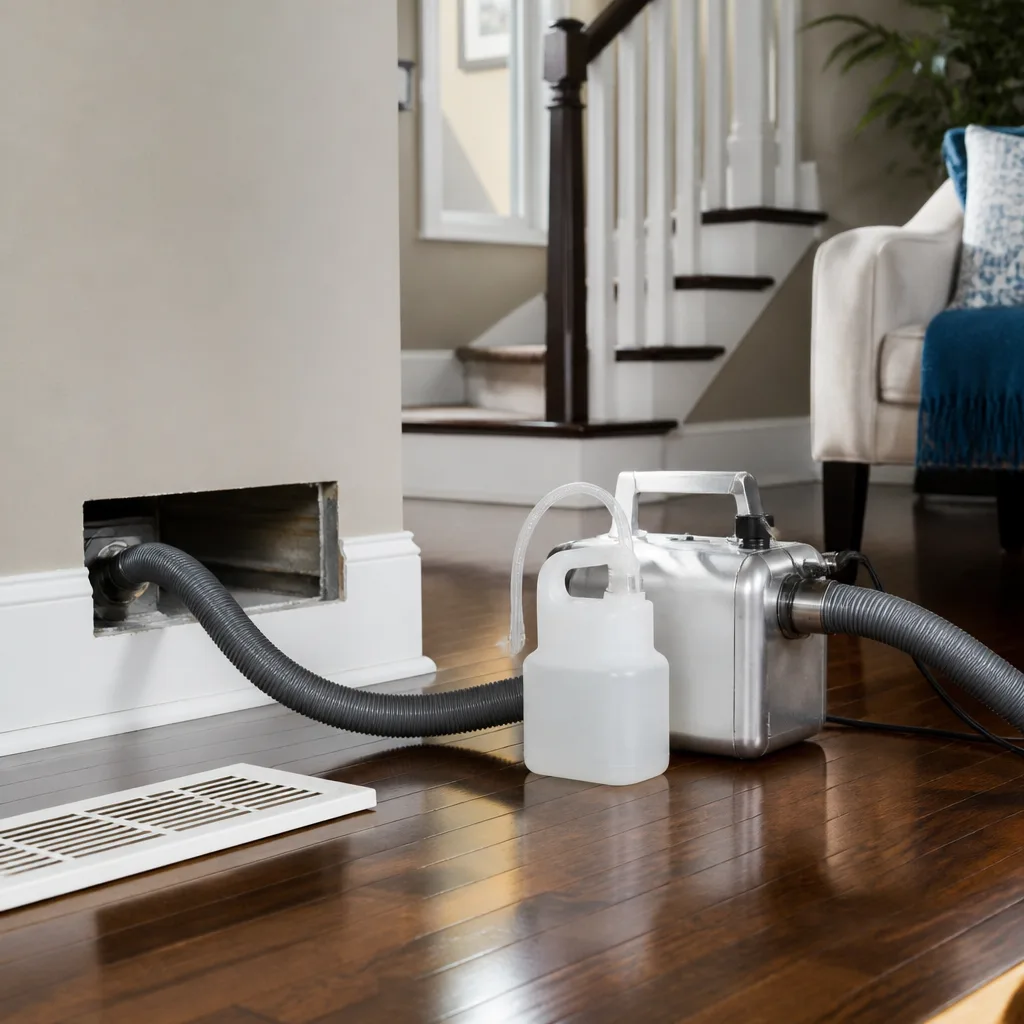 Sanitizing & deodorizing
Whole-system duct and dryer vent check with before-and-after photos - you see exactly what came out of your vents
That "$99 whole-house special" is a bait ad - the real number appears once they are in your hallway, or the "clean" is a shop-vac at the register. We photograph the inside of your ducts before and after instead.
The Complete Guide to Air Duct Cleaning in Queen Anne
Most air duct cleaning guides describe a process that assumes every home has the same sheet-metal trunk-and-branch system built in 1998. Queen Anne does not work that way. This neighborhood holds original galvanized ducts from the 1940s, flex duct retrofits from the 1980s, and hydronic systems that have no supply ducts at all, and the cleaning protocol changes significantly across each. Treat construction era and duct composition as the starting point and the rest of the job makes sense. Skip that step and you get a cleaning that looks finished but leaves the real problem in place. This guide covers material-by-material methods, moisture and mold risk in a marine climate, source removal versus blow-and-go, inspection of older runs, and what documentation a technician should hand you when the work is done.
Quick Answer
Air duct cleaning in Queen Anne means removing accumulated debris from the supply and return system using professional-grade extraction equipment, matched to what the ducts are actually made of. Galvanized steel can take aggressive rotary tooling; flex duct and fiberboard cannot. Because Queen Anne’s marine climate keeps indoor humidity elevated through much of the year, the job also includes checking for moisture and biological growth before any sanitizing step. A proper cleaning ends with before-and-after photos, airflow readings, and a written record of any disconnected or obstructed runs found along the way.
Styles & brands we work with
- Whole-home duct cleaning
- Dryer vent cleaning
- Camera inspection
- Sanitizing & deodorizing
Table of Contents
- How duct material changes the cleaning method
- Why Queen Anne’s climate raises mold risk inside ducts
- Source removal versus blow-and-go cleaning
- What older Queen Anne homes hide in their duct runs
- What a complete cleaning visit involves, step by step
- What a technician should document and hand back
- How often ducts really need cleaning
- What air duct cleaning typically costs in Queen Anne
How duct material changes the cleaning method
The single biggest factor in how a duct system gets cleaned is what it’s made of, and Queen Anne has all three common types within a few blocks of each other. The wrong tool on the wrong material either damages the duct or barely touches the contamination.
Galvanized steel
This is the sheet-metal ductwork common in pre-war and mid-century construction. It’s rigid, durable, and tolerates rotary brushes and high-velocity contact cleaning. Seams can loosen over decades, and joints that were sealed with mastic or tape may have opened. Steel ducts respond well to mechanical agitation combined with negative-pressure extraction, which is the system our technicians run using professional-grade equipment from Rotobrush and Nikro, systems built specifically for this trade rather than adapted from general construction vacuums.
Flex duct
Flexible duct, usually a wire helix wrapped in plastic and insulation, shows up in a lot of 1980s and 1990s retrofits and in newer condo mechanical closets. It’s easier to damage than steel. Aggressive brushes can tear the inner liner, and a torn liner becomes a collection point for debris and a path for unconditioned air. Flex duct needs gentler tooling and lower pressure, and in some cases the right answer is replacement rather than cleaning. A technician who runs the same rotary brush through every home in Queen Anne is a technician who has never had to explain a torn liner to a homeowner.
Fiberboard
Rigid fiberglass duct board is common in plenum construction and in some supply trunks. Its interior surface is fibrous, which means it traps debris in a way metal does not, and wet fiberboard can’t be cleaned back to a sanitary condition. If fiberboard has been wet, the honest recommendation is removal and replacement of that section, not a cleaning pass.
- Galvanized steel: rotary brush and contact cleaning are safe; check joints and seams for separation.
- Flex duct: gentle tooling, lower pressure; inspect the inner liner before and after.
- Fiberboard: cleanable only when dry and intact; replace any section that has been wet.
- Hydronic and radiant homes: no supply ducts at all; the relevant work is in the air handler, returns, and any ducted portion.
The practical takeaway: ask what your ducts are made of before you ask for a price. On a Queen Anne street with a mixed housing stock, that question separates a real estimate from a guess.
Why Queen Anne’s climate raises mold risk inside ducts
Moisture is the variable that makes duct cleaning in Queen Anne different from the same job in a dry inland city. The neighborhood sits in a marine climate where relative humidity stays high across much of the year, and the shoulder seasons bring cool, damp air that a heating system pulls in and warms. Warm, moist air inside a cool duct is exactly the condition mold needs.
What that looks like in practice:
- Condensation on cold surfaces. In summer, a cool supply duct running through a warm attic or crawlspace can sweat. Insulation that has slipped or been damaged leaves bare metal where moisture collects.
- Return-side growth. Returns pull from living space, and in a damp house they carry that moisture into the system.
- Dust plus moisture. Dry dust is a nuisance. Damp dust is food. Once dust settles on a surface that stays humid, biological growth follows.
- Crawlspace and basement connections. Many older Queen Anne homes have duct runs through unconditioned or semi-conditioned space. Those runs see the most temperature swing and the most condensation.
The reason this matters for cleaning is sequencing. Sanitizing a duct that still has a moisture source is a temporary fix. The order that holds up is: find the moisture, correct it where the correction is in scope, extract the contamination, then treat. That’s why we treat cleaning and sanitizing as separate steps rather than spraying something through the system and calling it done. Air Quality & Sanitizing is its own service for exactly this reason.
If you smell a musty odor when the system starts, or if anyone in the household notices symptoms that track with the HVAC running, that’s a signal to inspect before you clean. A visual inspection of the air handler, the plenum, and accessible duct interiors answers the moisture question quickly.
Source removal versus blow-and-go cleaning
There are two broad approaches to duct cleaning, and they produce very different results. Source removal, the standard the industry works to under NADCA guidance, means physically dislodging contamination from every interior surface and extracting it out of the system while the system is under negative pressure. Blow-and-go means running air or a brush through the ducts and letting the debris settle wherever it lands.
Blow-and-go is cheaper because it takes less time and less equipment. It’s also the reason duct cleaning has a reputation problem. When debris is loosened but not captured, some of it ends up in the living space and the rest redistributes through the system. A homeowner who has a blow-and-go cleaning and then finds dust on the furniture has not been served.
What source removal requires:
- Containment. The work area is protected and the system is put under negative pressure with a HEPA-filtered extraction unit before any agitation starts.
- Access. Every run gets an access point, cut and later sealed, so the tooling reaches the full length rather than just the opening.
- Agitation. Mechanical tools dislodge debris from the duct walls, including the corners and the top surface where dust settles.
- Extraction. The loosened material is pulled into the collection unit, not left to drift.
- Verification. The technician inspects and photographs the cleaned surfaces before closing access points.
We run Abatement Technologies filtration equipment on-site, the same category of equipment used in professional remediation environments, because containment is what separates a cleaning from a dust event. Professional-grade extraction, not shop vacuums, is the whole point. If a quote is dramatically lower than the others, ask what equipment is being used and whether the system will be under negative pressure. The answer tells you which approach you’re buying.
What older Queen Anne homes hide in their duct runs
Queen Anne’s housing stock spans a wide range of eras, and older homes routinely have duct problems that a cleaning alone won’t fix. The most common findings in our experience:
- Disconnected runs. A joint that has pulled apart, usually in a crawlspace or attic, sends conditioned air into unconditioned space instead of into a room. That room stays cold in winter and hot in summer, and the homeowner often blames the furnace.
- Crushed flex duct. Flex run through a tight joist bay or pinched at a transition loses most of its capacity. It looks connected and moves almost no air.
- Abandoned or capped branches. Old runs that were disconnected during a remodel but never sealed correctly can collect debris and leak air.
- Undersized or mismatched additions. A duct extended to a new room without recalculating the system may be starved for airflow, which means the run never gets cleaned by normal operation and accumulates debris faster.
- Retrofit transitions. Where a newer flex run ties into original galvanized trunk, the connection is a frequent failure point.
This is why inspection comes before cleaning, not after. Cleaning a system with a disconnected run means the extraction isn’t reaching the full system and the contamination problem will come right back. It’s also why Duct Repair & Sealing is one of our five core services rather than an upsell. We clean it, seal it, and treat it, because cleaning without sealing is a job that gets repeated.
The repair conversation also has an energy angle. A disconnected supply run in a crawlspace is blowing conditioned air into a space no one lives in. Sealing that connection and reconnecting the run is often the change a homeowner notices most, and it doesn’t require replacing the system.
What a complete cleaning visit involves, step by step
A proper visit covers the full duct-system lifecycle in one appointment rather than four separate contractor calls. Here’s the sequence a professional-grade cleaning follows.
- Walkthrough and system mapping. The technician identifies the equipment, the duct type in each area, the number of supply and return runs, and any obvious problem spots.
- Inspection. Accessible duct interiors, the air handler, the plenum, and the return path get a visual check. Disconnected runs, crushed flex, and moisture get flagged before cleaning starts.
- Containment setup. The extraction unit is connected and the system is brought under negative pressure. Work areas are protected.
- Access creation. Access points are cut at each run and later sealed.
- Agitation and source removal. Rotary tooling matched to the duct material loosens the debris; the extraction unit captures it.
- Air handler and coil cleaning. The blower and evaporator coil area are cleaned, because a clean duct system attached to a dirty coil still distributes contaminants. This is where HVAC cleaning overlaps with duct cleaning, and doing them together is the reason one visit covers the system.
- Sanitizing where warranted. After cleaning and after any moisture issue is addressed, the system is treated. This is the Air Quality & Sanitizing step.
- Reconnection and sealing. Any disconnected or damaged runs are repaired and sealed, and access points are closed.
- Verification and documentation. Photos, airflow readings, and findings are compiled and handed back to the homeowner.
A dryer vent check often happens on the same visit. Lint accumulation is a leading cause of residential fires, and dryer vent cleaning is straightforward to add while the equipment is already on-site. If the system has a whole-home air quality component, we also source and install Aprilaire and Honeywell solutions, which extends the work beyond a single cleaning into long-term indoor air quality improvement.
What a technician should document and hand back
This is the part of the job most homeowners never see, and it’s the part that tells you whether the work was actually done. A credible cleaning produces a paper and photo trail. If a company finishes and hands you a receipt with no documentation, you have no way to verify what happened.
What you should receive:
- Before-and-after photos of your own ducts. Not stock images, not a generic gallery. Photos of the actual runs in your home, taken at the same points before and after cleaning.
- Airflow readings. Static pressure or airflow measurements taken at the air handler or at registers, before and after, so the change is visible in numbers.
- Repair findings. A written list of any disconnected runs, crushed flex, wet fiberboard, or failed joints found during inspection, with a recommendation for each. This is the diagnostic output of the visit, separate from the cleaning itself.
- Moisture notes. Where moisture was found and what was done about it, so the next technician has a starting point.
- Sanitizing record. What was treated and with what, if a sanitizing step was performed.
Ask for this up front when you book. A company that plans to document the job has no problem committing to it, and a company that doesn’t document usually has a reason.
How often ducts really need cleaning
The honest answer is that most homes don’t need duct cleaning on a fixed schedule. Frequency depends on what’s in the house and what’s happening to it, not on the calendar. A home with no pets, no smokers, and clean filters may go many years between cleanings and be fine. A home that just finished a renovation may need it right away.
Conditions that justify a cleaning:
- Recent renovation or remodeling. Drywall dust, sawdust, and construction debris get pulled into the returns and distributed through the system.
- New home purchase. You don’t know the maintenance history of the system, and an inspection plus cleaning establishes a baseline.
- Visible debris at the registers. If you can see dust or debris inside a register, the run behind it has more.
- Musty or stale odor when the system runs. This points to moisture or biological growth and warrants inspection before cleaning.
- Allergy or respiratory symptoms that track with HVAC operation. Not a diagnosis, just a pattern worth investigating.
- Pests or a known rodent problem. Contamination from nesting material and droppings needs removal, not just a filter change.
- A system that has never been cleaned and is old enough that no one knows its history. In Queen Anne’s older homes, this is common.
The standard most of the industry works to advises cleaning when there’s a documented need, not on a timer. A company that pushes an annual contract on a clean system is selling maintenance, not solving a problem. If your system is clean and functioning, a filter schedule is the right spend.
What air duct cleaning typically costs in Queen Anne
Air duct cleaning in Queen Anne is priced per system, not per vent, and the estimate is written before work starts so the final invoice matches it. Typical ranges depend on system size, duct material, number of runs, and whether repair or sanitizing is included.
| Work | Typical estimated range | What drives the range |
|---|---|---|
| Whole-system duct cleaning, standard home | $350 to $650 | Number of supply and return runs, accessibility, duct material |
| Larger or multi-zone system | $650 to $1,100 | System size, multiple air handlers, extended runs |
| Duct repair and sealing, per finding | $150 to $500 | Whether a run is reconnected, resealed, or replaced |
| Sanitizing after cleaning | $100 to $300 | System size and treatment scope |
| Dryer vent cleaning (standalone) | $125 to $225 | Vent length, routing, access |
These are estimates for typical work, not a quote. The written estimate sets the final price, and it’s free. Two things drive the wide spread in quotes you’ll get in Queen Anne: whether the system is under negative pressure with professional-grade extraction, and whether repair findings are included in the scope. A low quote that covers cleaning only, with no containment and no repair, isn’t the same job as a higher one that does. Ask what’s included before you compare numbers. Call (833) 736-3635 for an exact quote. We answer 24/7. Fast dispatch from 7am to 7pm, Sunday through Friday.
Common Mistakes to Avoid
- Choosing on price alone. The cheapest bid in Queen Anne is usually a blow-and-go with a shop vacuum, which redistributes debris rather than removing it. Ask what equipment is used and whether the system will be under negative pressure before you decide.
- Skipping inspection before cleaning. Older homes here often have disconnected or crushed runs. Cleaning a system with a disconnected run means the extraction misses part of the system, and the problem returns.
- Using the same method on every duct type. Rotary brushes that are safe on galvanized steel can tear flex duct liners. The method should follow the material.
- Sanitizing before fixing moisture. Treating a duct that still has a condensation source is a short-lived result. Correct the moisture first, then treat.
- Accepting a receipt instead of documentation. Ask for before-and-after photos of your own ducts and airflow readings. If the company can’t provide them, you can’t verify the work.
- Ignoring the coil and air handler. A clean duct system connected to a dirty evaporator coil still circulates contaminants. Clean the whole system, not just the ducts.
- Treating duct cleaning as a one-time fix for a repair problem. If a run is disconnected or a joint has failed, cleaning without sealing means the contamination returns. Find the source, not just the symptom.
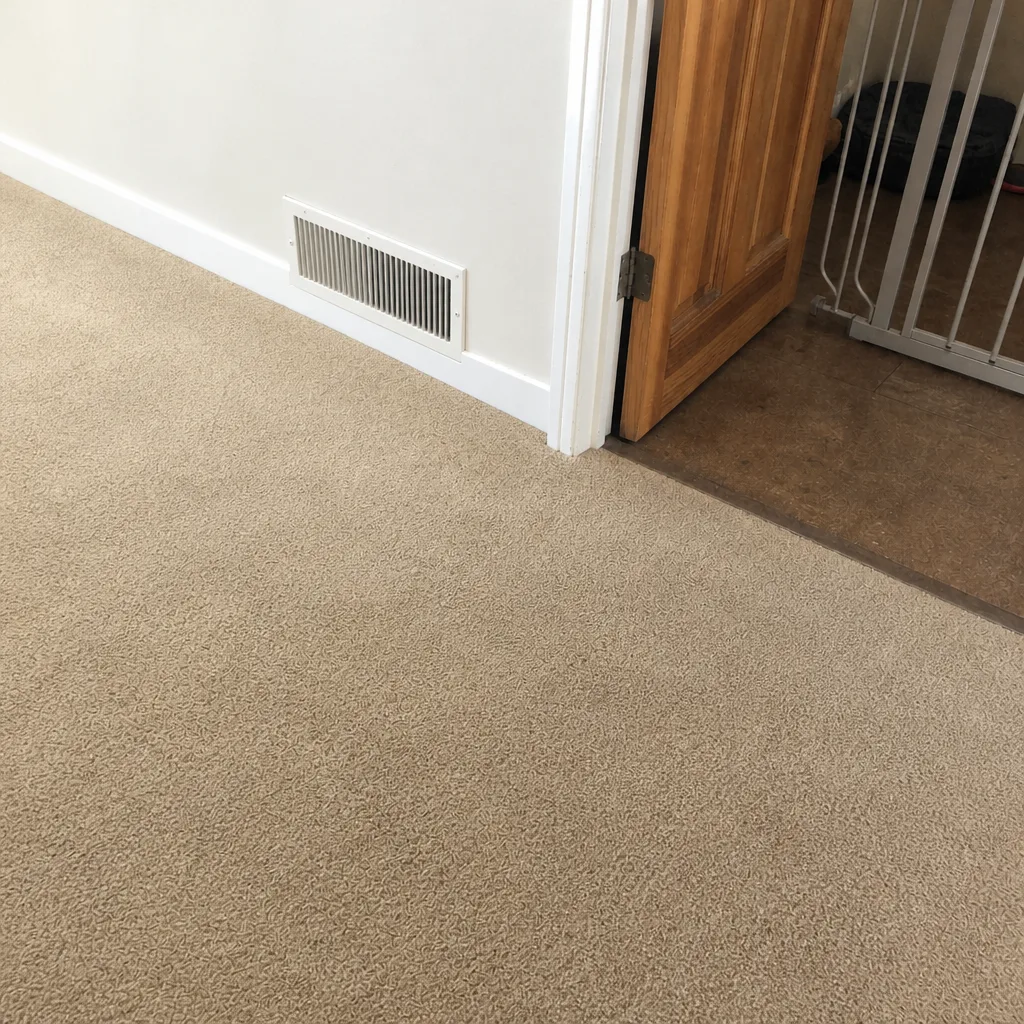
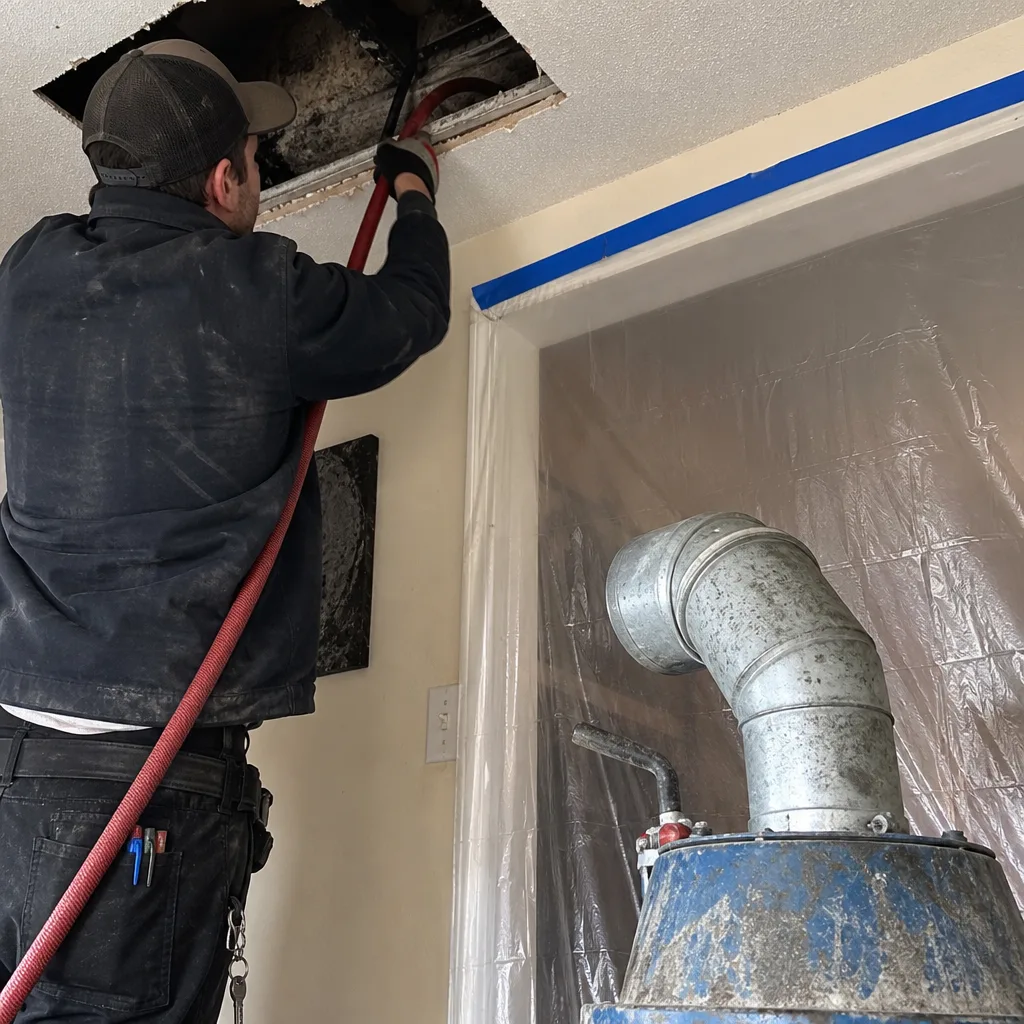
See the difference
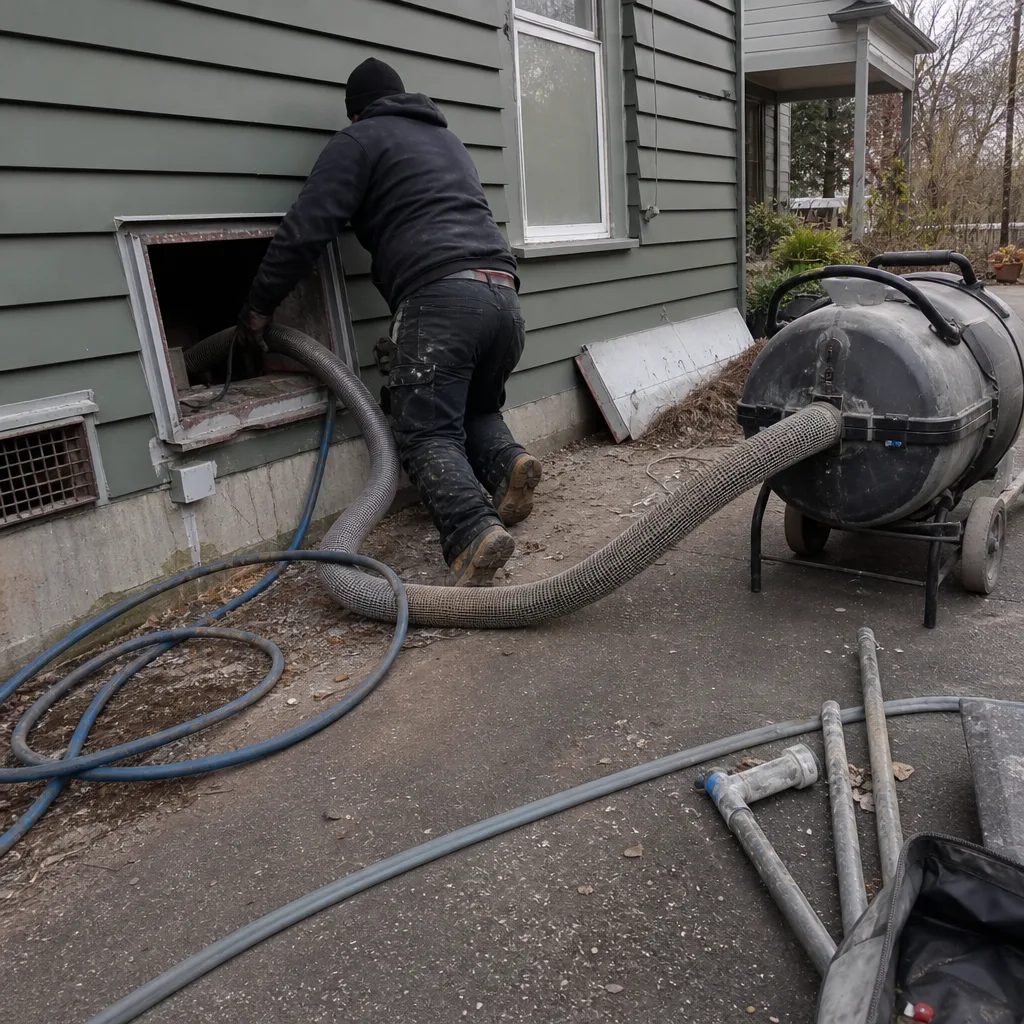 Before
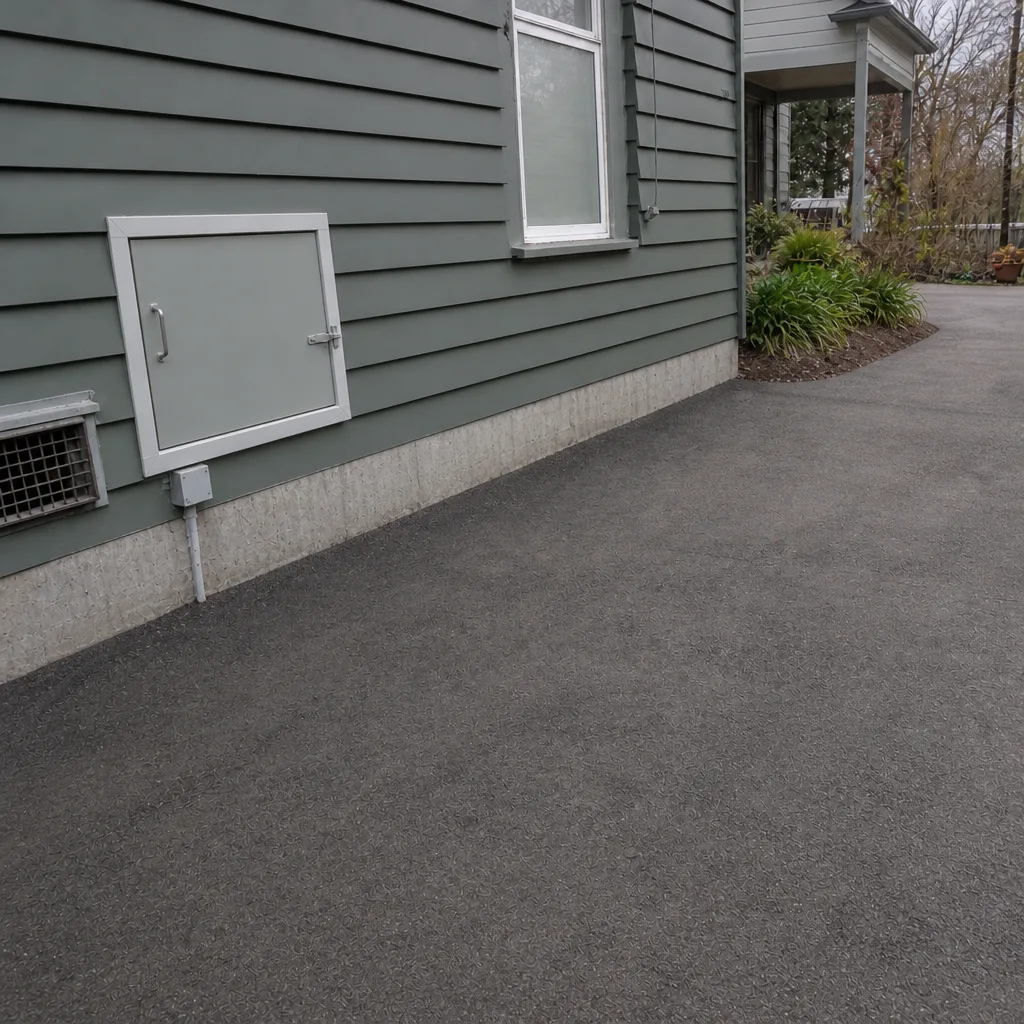 After
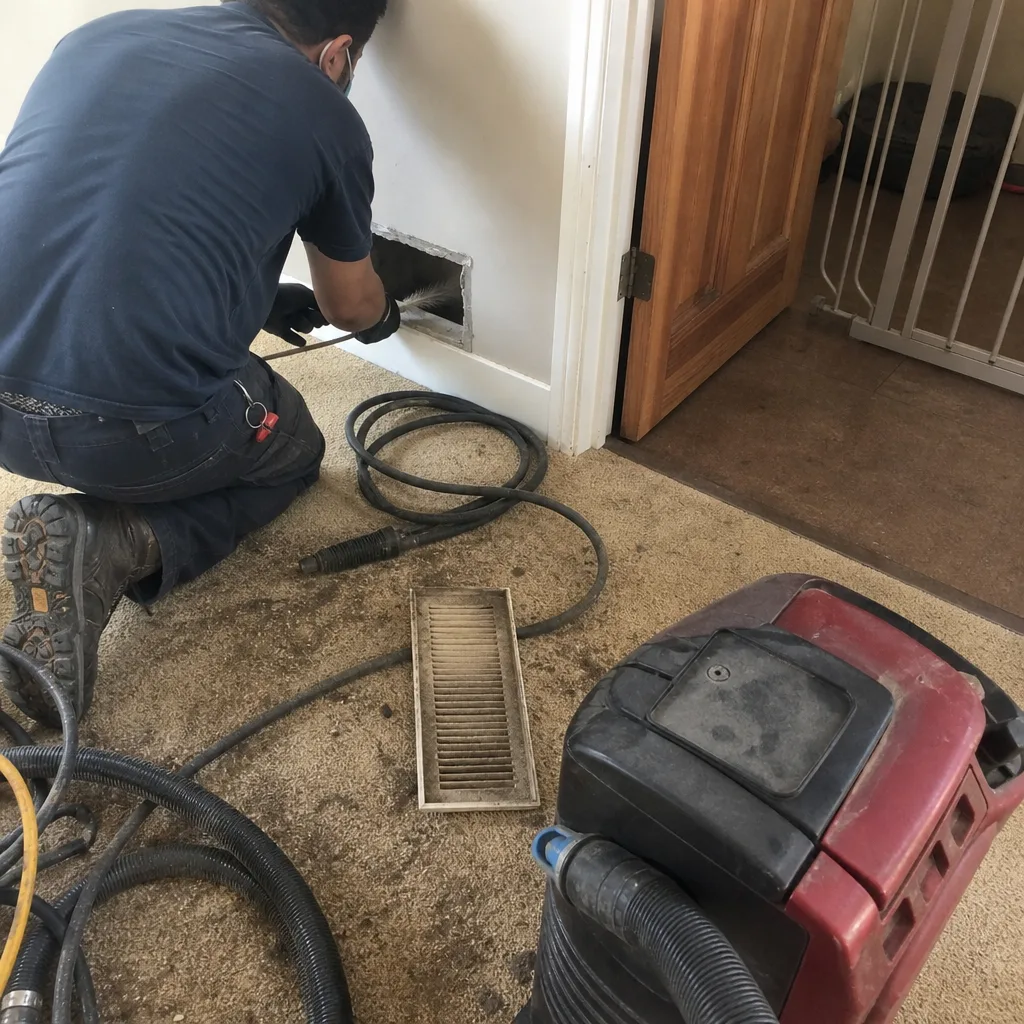 Before
 After
 Before
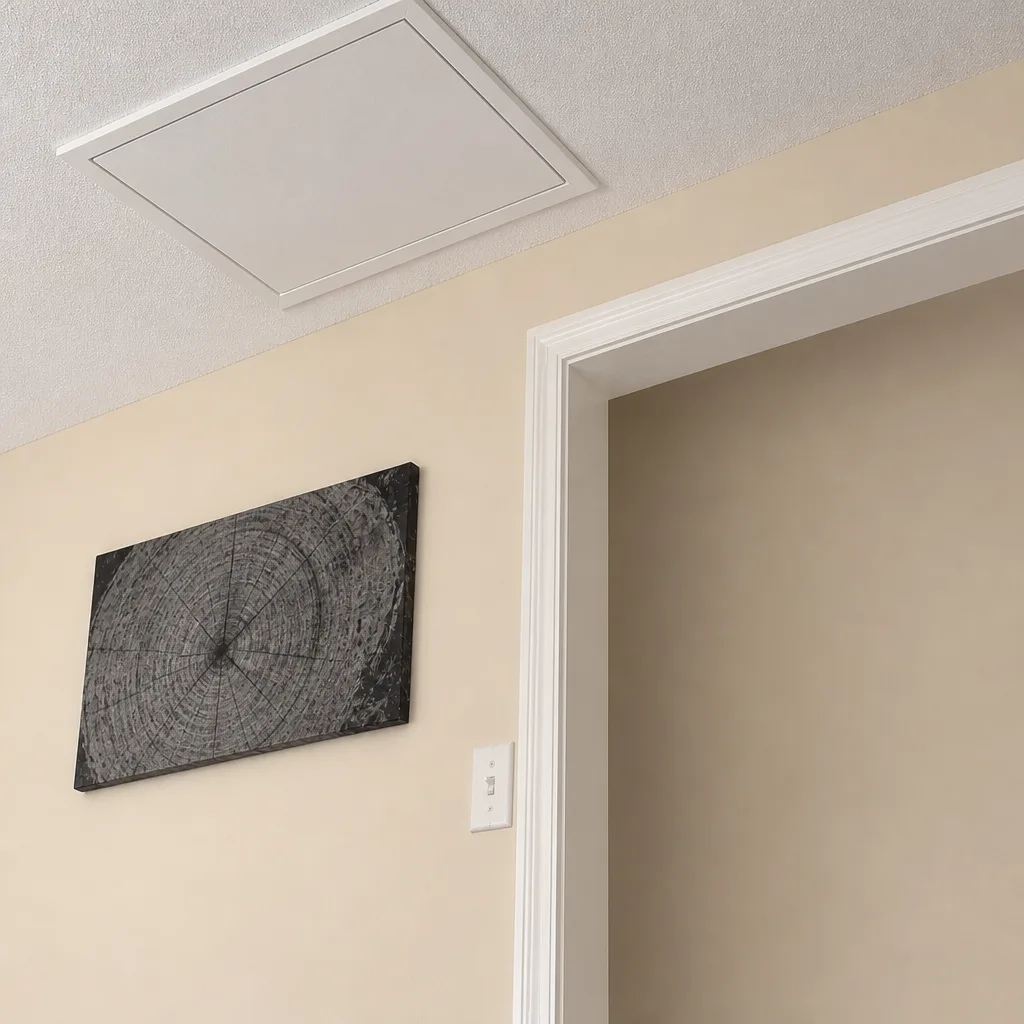 After
When to Call a Professional
Some duct work is straightforward maintenance; some of it needs a trained technician. Call a professional if you notice visible debris inside the registers, a musty odor when the system starts, or dust settling on surfaces faster than usual. Call if you’ve just finished a renovation, bought a home with an unknown maintenance history, or had a pest problem in the ductwork. Call if a room doesn’t heat or cool like the others, since that often points to a disconnected or crushed run that cleaning alone won’t fix. The air handler, coil, and electrical components are not a do-it-yourself area; a trained technician has the tools and containment equipment to clean the system without spreading contamination through your home. Air Duct Cleaning Queen Anne offers free estimates in Queen Anne, call (833) 736-3635. We answer 24/7. Fast dispatch from 7am to 7pm, Sunday through Friday.
Frequently Asked Questions
Air duct cleaning in Queen Anne typically runs $350 to $650 for a standard whole-home system, and $650 to $1,100 for larger or multi-zone systems, priced per system rather than per vent. Duct repair and sanitizing are estimated separately and included in the written quote before work starts. Call (833) 736-3635 for an exact quote; estimates are free.
Cheaper quotes usually reflect a different job: no negative-pressure containment, consumer-grade vacuums instead of professional extraction, and no repair findings. That approach loosens debris without capturing all of it, which is how duct cleaning earned its reputation for disappointing results. Ask what equipment is used and whether the system will be under pressure. Call (833) 736-3635 for an exact quote; estimates are free.
You should receive before-and-after photos of your own ducts, airflow readings, and a written list of repair findings. A company that documents the job means you can verify the work. If a company won’t commit to documentation up front, that tells you something. Call (833) 736-3635 for an exact quote; estimates are free.
Most homes don’t need duct cleaning on a fixed schedule. It’s warranted after a renovation, a home purchase with unknown history, a pest problem, visible debris at the registers, or a musty odor when the system runs. A clean, functioning system with good filtration doesn’t need an annual cleaning. Call (833) 736-3635 for an exact quote; estimates are free.
Yes. Queen Anne’s pre-war and mid-century homes often have original galvanized ducts that tolerate aggressive cleaning, while 1980s and 1990s retrofits often use flex duct that needs gentler tooling. Some older homes have disconnected or crushed runs that should be found and repaired before or during cleaning. The material and construction era determine the method. Call (833) 736-3635 for an exact quote; estimates are free.
Yes. High year-round humidity raises the risk of condensation inside ducts, and damp dust becomes a surface for biological growth. That’s why an inspection for moisture and a sanitizing step after cleaning matter more here than in a dry climate. Correcting the moisture source first is what makes the treatment last. Call (833) 736-3635 for an exact quote; estimates are free.
The Bottom Line
Air duct cleaning in Queen Anne isn’t one job applied to every home. The material of your ducts, the era of your construction, and the moisture level in the system all determine what the correct cleaning looks like. Galvanized steel, flex duct, and fiberboard each need different tooling. Source removal with negative-pressure containment is the standard; blow-and-go is the shortcut that gives the trade its reputation problem. Older homes here frequently have disconnected or crushed runs that need inspection and repair, not just cleaning. And you should walk away with before-and-after photos, airflow readings, and a written record of what was found. One call covers the full system: cleaning, sealing, sanitizing, and repair. Air duct cleaning done properly is verifiable work, not a promise. If you want a straight answer about your system, call (833) 736-3635. We answer 24/7. Fast dispatch from 7am to 7pm, Sunday through Friday. Estimates are free, and the written quote sets the final price.
Written by the team at Air Duct Cleaning Queen Anne.